It is difficult to imagine cinema taking place in a vacuum. Without the scene to fill each storyline, we cannot be transported away from our reality to the world of the film we are immersed in. Within Godard’s list of ways to make films, we can add another: cinema as architecture. The interaction between cinema and architecture – “the inherent architecture of cinematic expression and the cinematographic essence of architectural experience” is a complex, often multifaceted dialogue between both disciplines. [1]
So how to explain this? Why is a movie that puts mind-bending architecture so squarely at the center of its story so architecturally underwhelming? Why does its attempt to make metaphorical links between buildings and storyline?
Inception
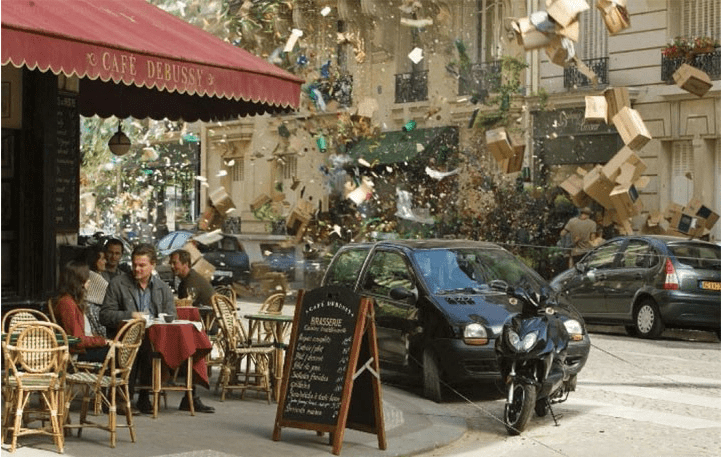
Christopher Nolan’s hyper-complex psychological thriller doesn’t just make architecture a central theme; the whole story hinges on the ability of architects to design buildings, neighborhoods and whole cities inside other people’s dreams. Early on, Leonardo DiCaprio’s brooding hero, Cobb, gives us reason to look forward to those invented worlds when he warns the young architect he’s hired, Ariadne ( Ellen Page), that she should “never create places from memory” and “always imagine new places.” (Sounds promising, right? Sounds like a manifesto! Sounds like the Bauhaus circa 1920!) In the same scene, Ariadne’s skittish subconscious causes a whole section of Paris to fold deliriously in on itself, as if Baron Haussmann’s grand boulevards had suddenly turned to rubber.”It is undeniable that the cinema has a marked influence on modern architecture; in turn, modern architecture brings its artistic side to the cinema…. Modern architecture not only serves the cinematographic set [decor], but imprints its stamp on the staging [mise-en-scene], it breaks out of its frame; architecture ‘acts.’”- Robert Mallet-Stevens [2]
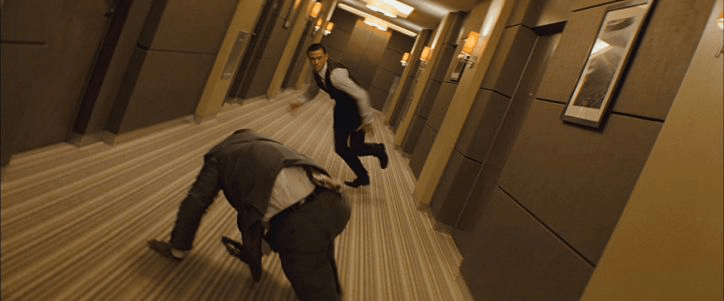
From then on, though, the architectural set pieces grow increasingly trite and familiar. On the streets of downtown Los Angeles, including a wide intersection in front of a Famima store; the inside of a van; a hotel room; hotel hallways; an elevator; an elevator shaft; and a quasi-Brutalist mountainside complex where, in the deep snow, you can make out the boot-prints of both James Bond and Jason Bourne.
 Yetta
Yetta 